Read each guest count as adults drinking the selected categories. These figures do not deduct children or non-drinkers. Beer, cider, water and alcohol-free drinks, including their ice and glasses, are outside the model. Use full attendance for the actual staffing plan. The figures below are model allowances, not measured consumption or a complete inventory for every attendee.
The direct answer
For 100 guests over five party hours, start with 600 planned serves
That is the central benchmark in this report. With the example split of 34% spirits, 33% wine and 33% fizz, the model converts those serves into 11 bottles of 70cl spirits, 20.4 litres of mixer, 50 bottles of wine and 33 bottles of fizz. It also produces 150kg of serving ice, 600 working glasses where there is no washing during service, and two Cocktailhire-level bartenders.
These are purchasing and planning allowances, not a claim that every guest will drink six drinks. The point is to make the assumption visible, repeatable and adjustable before an order is placed.
Five-hour benchmark
What the model produces as the guest list grows
Every row below uses five hours of party service, the same 34/33/33 drinks split, no separate reception and no bottle-chilling buckets. Beer, table wine, soft drinks, water and venue packages are outside these figures and should be planned separately.
| Guests | Serves | Spirit bottles | Mixers | Wine bottles | Fizz bottles | Serving ice | Glasses | Bartenders |
|---|---|---|---|---|---|---|---|---|
| 50 | 300 | 6 | 10.2L | 25 | 17 | 75kg | 300 | 1 |
| 75 | 450 | 8 | 15.3L | 38 | 25 | 112.5kg | 450 | 2 |
| 100 | 600 | 11 | 20.4L | 50 | 33 | 150kg | 600 | 2 |
| 125 | 750 | 13 | 25.5L | 62 | 42 | 187.5kg | 750 | 3 |
| 150 | 900 | 16 | 30.6L | 75 | 50 | 225kg | 900 | 3 |
| 200 | 1,200 | 21 | 40.8L | 99 | 66 | 300kg | 1,200 | 4 |
| 250 | 1,500 | 26 | 51L | 124 | 83 | 375kg | 1,500 | 5 |
Spirit bottles are 70cl. Wine and fizz bottles are 75cl. All physical bottle quantities are rounded up.
Share the benchmark
A reusable five-hour planning table
This static graphic summarises the five-hour scenarios without requiring the calculator or a script. Publications, planners and venues may embed it unchanged with the attribution link below.
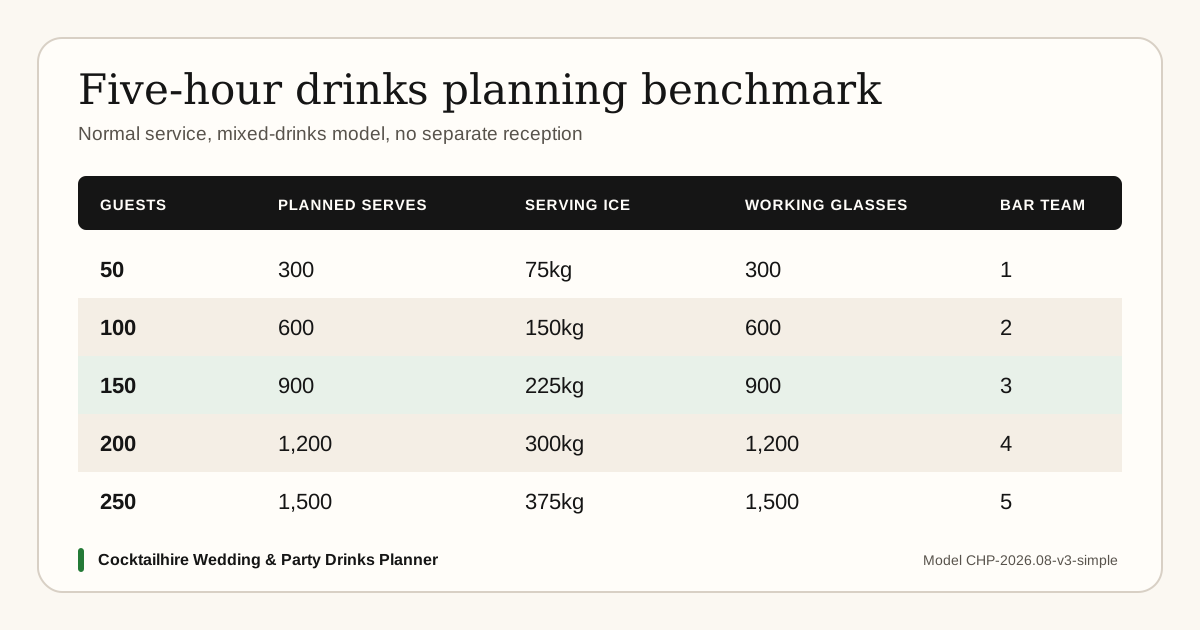
<a href="https://www.cocktailhire.com/party-drinks-calculator/uk-wedding-party-drinks-planning-report-2026/"><img src="https://www.cocktailhire.com/party-drinks-calculator/uk-wedding-party-drinks-planning-report-2026/assets/five-hour-wedding-party-drinks-benchmark.svg" alt="Five-hour wedding and party drinks planning benchmark by Cocktailhire"></a>The cost of another hour
For 100 guests, each extra party hour adds 120 planned serves
Extending the bar is not only a staffing decision. At the report's mixed-drinks split, moving from four hours to six hours adds 240 planned serves, four 70cl spirit bottles, 8.2 litres of mixer, 20 wine bottles, 13 fizz bottles, 60kg of serving ice and 240 working glasses.
9 spirit bottles, 16.3L mixer, 40 wine, 27 fizz, 120kg ice, 480 glasses.
11 spirit bottles, 20.4L mixer, 50 wine, 33 fizz, 150kg ice, 600 glasses.
13 spirit bottles, 24.5L mixer, 60 wine, 40 fizz, 180kg ice, 720 glasses.
Reception drinks
A separate one-hour fizz reception changes more than the bottle count
For 100 guests, the model adds 120 reception serves. That takes the example from 33 to 53 fizz bottles and from 600 to 720 working glasses. The extra glassware matters because reception flutes may still be in guests' hands or waiting for collection when the evening bar opens.
Two worked examples
From a table of figures to an actual event plan
These examples use the same model as the tool and its PDF, with the report's 34% spirits, 33% wine and 33% fizz split. All attendees in these examples are adults drinking that selection. No washing, beer, water, alcohol-free drinks, separate table service or toast is included.
A five-hour private party for 50 adults
Enter 50 adults, five party hours, the 34/33/33 split, no separate reception and no chilling buckets. The model produces 300 party serves: 102 spirit serves, 99 wine serves and 99 fizz serves.
- 6 x 70cl spirit bottles, with 10.2 litres of mixer.
- 25 x 75cl wine bottles and 17 x 75cl fizz bottles.
- 75kg service ice; zero additional bucket-chilling ice in this scenario.
- 300 working glasses: 102 highballs, 99 wine glasses and 99 flutes.
- 1 bartender under the usual starting ratio, because total attendance here is also 50.
Zero chilling ice does not mean warm bottles are ready to serve. This example assumes bottle chilling is handled separately. Add bucket numbers in the tool if ice will be used for that job.
100 adults, a fizz reception and five party hours
Enter 100 adults and five party hours. Add the separate one-hour fizz reception and two chilling buckets. The model adds 120 reception serves to 600 party serves. Do not enter six party hours as well, which would count the reception twice.
- 11 x 70cl spirit bottles, with 20.4 litres of mixer.
- 50 x 75cl wine bottles and 53 x 75cl fizz bottles, including the reception.
- 150kg service ice plus 24kg bucket-chilling ice: 174kg in total.
- 720 working glasses: 204 highballs, 198 wine glasses and 318 flutes.
- 2 bartenders under the usual starting ratio, because total attendance here is also 100.
The 24kg chilling allowance is two buckets x six active hours x 2kg. Dinner drinks, a separate toast, different reception attendance and any later arrivals need their own review; they are not silently included.
Download both worked examples as a printable, source-linked PDF. The same figures remain readable here without a download. See how to handle non-drinkers and full attendance.
What catches planners out
The number is rarely the only problem
The first wave
Five hours of average demand says nothing about how many guests approach in the first ten minutes. Opening preparation and bar position still matter.
Cold storage
Correct bottle quantities do not help if wine, fizz, beer and mixers cannot be chilled or delivered at the right time.
Dirty glass return
A no-washing calculation assumes enough working stock for every planned serve. Collection routes and dirty-return terms still need an owner.
Wedding phases
Reception fizz, table wine, toast drinks and the evening bar should be separated so the same drinks are not bought twice.
Who is drinking
Children, drivers, alcohol-free guests and people leaving early change the real pattern. Use the calculator as the starting allowance, not a substitute for knowing the room.
What can be returned
Sale-or-return terms reduce the risk of sensible rounding. Confirm unopened-return rules before choosing the final order quantity.
Methodology
How every figure was produced
The report runs Cocktailhire's public model across seven guest counts and three service lengths. Every scenario uses 1.2 planned serves per guest per party hour and a 34% spirits, 33% wine and 33% fizz split. Spirits use a 35ml measure and 20 serves from a 70cl bottle. Mixers use 100ml per spirit serve. Wine uses a 175ml pour and four serves from a 75cl bottle. Fizz uses a 125ml pour and six serves from a 75cl bottle.
When spirits are selected, serving ice is modelled at 0.25kg for every planned party serve. Working glassware equals all planned serves because the report assumes no glass washing during service. Cocktailhire-level staffing starts at one bartender per 50 guests and rounds up.
The figures are reproducible planning allowances. They are not observed consumption, a customer survey or a claim that every guest drinks at the same rate.
Cocktailhire also reviewed 15 anonymised historical event packs and shopping lists on 20 August 2026. Those records supported the historic planning process and staffing benchmark, but did not contain complete opening stock, returns, wastage and post-event consumption. We therefore do not present them as consumption evidence.
Read the calculation rules, evidence limits and privacy notes in full.
Use the data
Download, check and cite the benchmark
The complete dataset contains all 21 guest-count and duration scenarios. Editors, planners and researchers can check the figures against the public method and link to this permanent report page.
About the author
Built from more than 20 years in cocktails and events
Stu Hoyland leads Cocktailhire. The planning model translates the decisions Cocktailhire makes around guest numbers, service time, bottles, ice, glassware and team size into a free public tool. The calculation is published because a useful benchmark should be open to checking, not hidden behind a lead form.
Read about Stu Hoyland and Cocktailhire's operating approach.
Quick answers
Questions couples and planners ask first
How many drinks should I plan for 100 wedding guests?
For five hours of normal party service, this model produces 600 planned serves. Calculate reception, meal and toast drinks separately.
How much ice should I plan for 100 guests?
The five-hour mixed-drinks scenario produces 150kg of serving ice. Add bottle-chilling ice separately for every bucket and active hour.
How many glasses do I need if there is no washing?
The model allocates one working glass per planned serve. That means 600 glasses for the 100-guest, five-hour scenario, plus 120 more if there is a separate one-hour fizz reception.
Does the report include beer, water or soft drinks?
No. The current public form does not collect the information needed to estimate those categories responsibly, so they must be planned separately.