Commercial event bar case study
Amazon Manchester team event bar.
Amazon’s Manchester team needed an after-work drinks setup that felt settled inside the office, not a temporary table pushed against a wall. Cocktailhire supplied a three-metre wooden mobile bar frontage over a steel frame, prepared the working bar area and served the selected drinks for the team after the working day.
For current bar sizes, layouts and pricing, see Hire a Mobile Bar.
Planning the drinks side of a work event? See Company Event Bar Hire.
The roomAn after-work Amazon Manchester office team event inside the workplace setting.
What had to be protectedThe office setting, guest movement and the event feeling planned rather than improvised.
What was suppliedA three-metre wooden bar frontage over the steel frame, set for bartender service.
Why the setup workedThe bar gave guests a clear service point while Amazon handled ingredient and ice ordering internally.
What similar organisers should take from thisDecide bar presence, ingredient responsibility, access and service window before the room fills.
What was supplied
Event typeAmazon Manchester team event inside the office after the working day.
Bar setupThree metres of wooden bar cladding on top of the steel mobile bar frame.
Selected drinksMojitos, Sex on the Beach and Pina Coladas from the existing Cocktailhire menu.
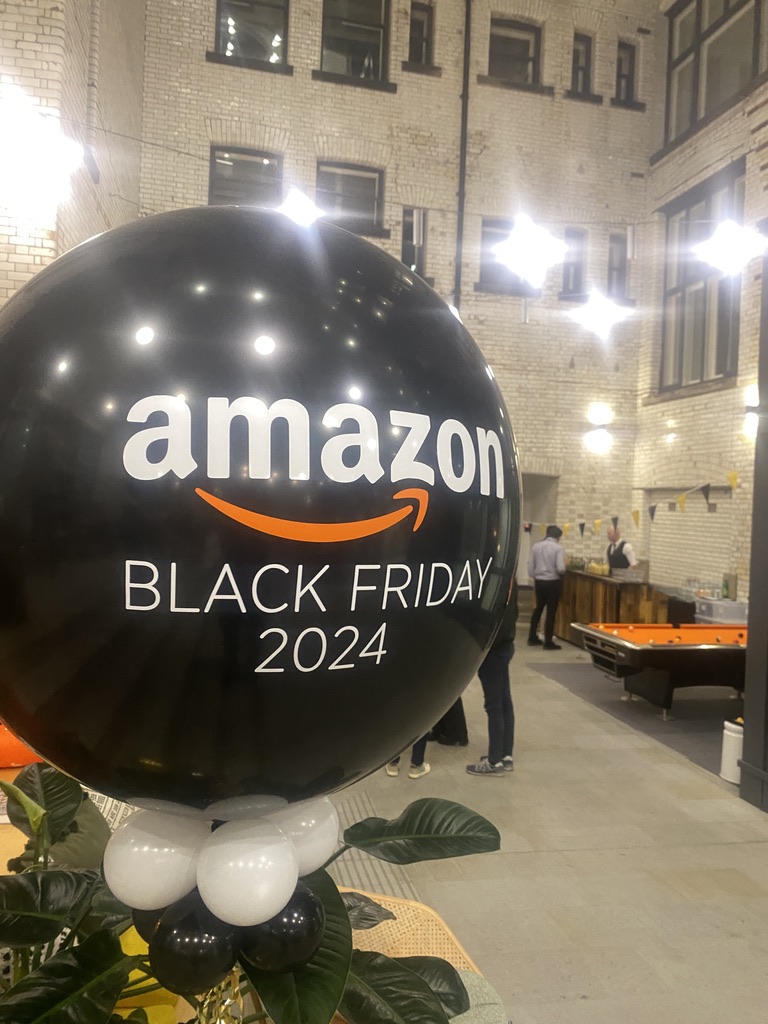
Corporate event bars are often judged in the first few minutes. Guests see the setup before they taste a drink. If the bar looks improvised, the event feels improvised. For this Amazon Manchester event, the room already had a strong identity: exposed brick, office architecture, internal event dressing, a pool table and staff moving between work and the evening drinks. The bar needed to sit inside that room as if it belonged there.
The wooden frontage was the correct choice because it gave the drinks station a proper event presence without trying to overpower the office. It looked warmer than a plain trestle table, but still practical enough for a staff event where people were moving around the space. The steel frame underneath gave the service point the working structure the bartender needed, while the wooden cladding made the front of the bar look like part of the event rather than a piece of back-of-house equipment.
How the event worked
Amazon handled the ingredients internally. We handled the bar.
One useful detail from this event is that Amazon used its own internal ordering system to send the ingredients and ice to itself. That can work well for corporate teams because procurement, building access and delivery handling are often easier when the company controls the ordering process. It does, however, make the bar plan more important, not less important.
When a client supplies ingredients, the service still has to be organised around what arrives, where it is stored, how it is accessed and how quickly the drinks can be served once guests begin to gather. The job is not simply turning up and pouring. The bar area needs to be set, the glasses need to be ready, the working bottles and juices need to be arranged, and the service needs to make sense for the room.
For this event the drinks were familiar, popular choices: Mojitos, Sex on the Beach and Pina Coladas. That choice made sense for a relaxed team party because the drinks are easy for guests to understand without a long explanation. The event did not need a complicated drinks list. It needed drinks people recognised, made consistently, from a bar that looked ready when the team arrived.
The important part was not novelty. It was making the drinks side feel handled.

Why this matters commercially
A commercial bar has to protect the room while serving drinks properly.
This is the difference between ordinary party bar hire and a commercial event bar that belongs in a work setting. At a home party, the host is usually trying to avoid being pulled into the kitchen all night. At a commercial event, the organiser is trying to avoid a different version of the same problem: the bar becoming the weak point that everyone notices.
For office events, brand rooms, launches and team parties, the drinks area has to be clear. Guests need to know where to go. The service needs to keep moving. The setup has to look intentional in photos and in the room. Staff should not have to explain where everything is or rescue the drinks side while the event is already underway.
That is why the structure of this Amazon event is a useful proof point. It shows Cocktailhire working inside a recognised commercial environment, with the client controlling part of the supply chain and our side handling the bar setup and drinks service around it. It is not a claim about being able to work commercially. It is a real room, a real team event and a real bar setup doing the job it was brought in to do.
The same standard applies when the event is a hotel reception, a product launch, a media room, a staff party or a private celebration. The bar does not need to shout for attention. It needs to look right, work properly and keep the drinks side away from the organiser’s stress list.
Planning notes for similar events
What corporate organisers should take from this.
If your company is planning an office event, there are three decisions to make early. First, decide whether the bar needs to be a visible feature or a quiet service point. Second, decide whether your internal team will order the ingredients and ice, or whether you want the drinks side covered as part of a wider booking. Third, decide whether the room needs a physical bar frontage or whether the existing space already gives the bartender a proper working point.
Those decisions affect the look of the room, the service speed and the amount of organisation left with your team. A three-metre bar was right for Amazon Manchester because it gave the drinks area enough presence without dominating the room. The chosen drinks were right because the event was relaxed and social. The internal ordering process was workable because the client had the systems to receive what was needed.
If those conditions are different, the plan changes. A product launch may need a cleaner visual style. A hotel event may need tighter arrival and access planning. A media or PR room may need the bar to sit cleanly in photographs. A larger staff party may need more service space or a different staffing plan. The useful part is not copying this event exactly. It is understanding how the bar was made to fit the room.
Clients choose drinks from the existing Cocktailhire menu. The event menu is then built from the selected drinks.

